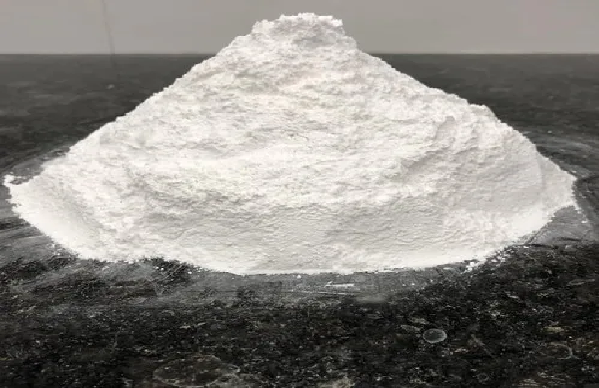
Nobody in the rubber industry gives talc much credit. It does not make headlines. It does not come up in procurement meetings unless something has gone wrong. But take it out of a rubber compound and the problems are immediate sheets stuck on the production line, heat resistance drops, finished products fail checks. Talc is one of those inputs the whole operation quietly depends on.What has changed over the past decade is where that talc comes from. The growing network of talc powder manufacturers in India has given rubber producers a genuinely reliable sourcing option. This is not about cheap supply. It is about supply that holds up technically, batch after batch, without the inconsistency that used to make Indian sourcing a gamble for quality-conscious manufacturers.
Why talc matters in rubber compounding
Talc is a reinforcing filler that does several things at once. It stiffens rubber compounds without adding significant weight. It prevents rubber sheets and profiles from sticking during processing which sounds minor until a production run is lost to it. Its lamellar particle structure improves heat resistance and chemical stability, both of which matter in automotive seals, gaskets, and rubber components that operate in demanding environments.Other fillers exist. Most handle one or two of these requirements. Talc handles all of them at a price that does not break the formulation economics. That is a hard combination to replace, which is why rubber manufacturers keep coming back to it.
What makes Indian talc worth sourcing
Rajasthan has large talc reserves. What is less discussed is the geological consistency of those deposits, particularly in the Udaipur belt. Consistent geology means consistent output high whiteness, low carbonate contamination, and particle behaviour that does not shift between batches.For a rubber manufacturer whose compound has to perform identically every production cycle, that predictability matters more than a competitive unit price alone. The reputation that talc powder manufacturers in India have built in global rubber supply chains came from exactly this. Buyers did not switch suppliers out of curiosity. The product performed, the documentation was clean, and the pricing made long-term sense.
Choosing the wrong grade is a costly mistake
Three grades dominate rubber applications, and they are not interchangeable.Micronized talc suits high-performance compounds where dispersion has to be fine and even. A poor grind creates weak spots that become product failures expensive to trace and more expensive to fix. Surface-treated talc improves bonding between particles and the rubber polymer matrix, important in mechanically stressed applications. Industrial-grade talc covers general-purpose products where spec tolerances are wider and cost efficiency takes priority.
The error most buyers make is selecting a grade by price without checking whether the particle size and surface chemistry actually suit the compound. What saves money on the purchase order can show up as a quality problem in the finished product, at which point the cost of investigation far exceeds whatever was saved upfront.
Quality that works in practice
Every credible talc supplier has ISO certification. That does not tell you much on its own.The real question is whether the quality system runs in the plant or only in the documentation. Per-batch particle size distribution testing is different from periodic audits. A certificate of analysis that reflects the actual shipment is different from a template attached to every delivery by default. Sudarshan Group tests each batch and provides documentation that matches what is actually in the consignment. When technical questions come up, the team is reachable not buried under a support process that takes days to respond.
Why choose Sudarshan Group
Sudarshan Group mines, processes, and supplies directly from Rajasthan. No intermediaries, no trading layer adding cost and introducing variability into what arrives at the buyer's facility.The company understands that rubber manufacturers are not just buying a mineral. They are buying a technical input that has to behave a specific way inside a specific compound. Sudarshan Group advises on grade selection before an order is placed, not after a shipment causes a problem. For manufacturers who have dealt with inconsistent supply and want something more dependable, that working relationship makes a real difference.
Conclusion
Talc keeps the rubber industry running, without recognition, and it will keep doing it. India has the deposits, the processing infrastructure, and companies like Sudarshan Group that know how to supply this material properly. For rubber manufacturers evaluating talc suppliers seriously, that combination is a reasonable place to start.