
Why Calcium Carbonate Powder Whiteness and Brightness Ratings Are Not the Same
April 20, 2026
How Dolomite Powder Works as a Flux and Slag Conditioner in Steel Manufacturing
May 11, 2026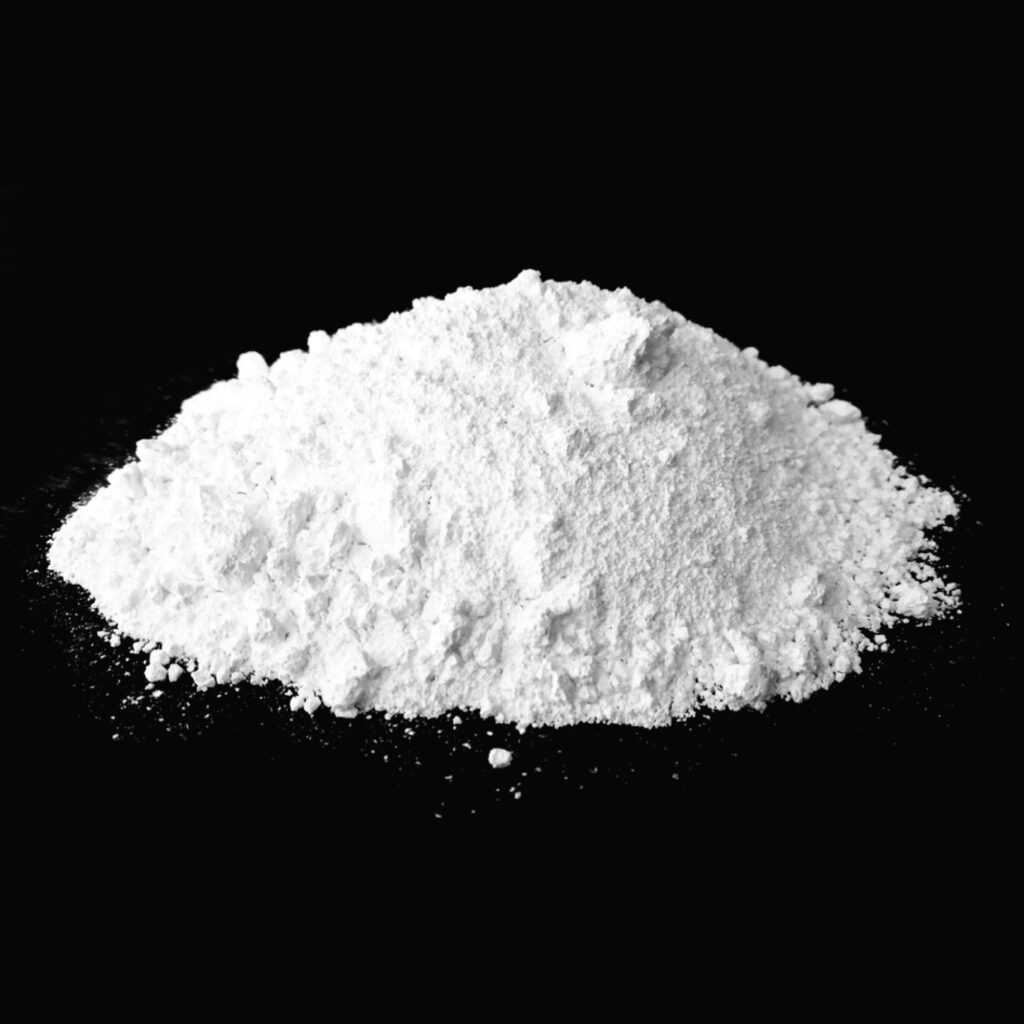
Industries Generate More Waste Than Most People Realise
Most manufacturers know this. They're dealing with real pressure from regulators, from buyers, from their own finance teams all pushing for tighter, cleaner operations. The hard part isn't knowing waste is a problem. It's finding a practical fix that doesn't break what's already working on the production floor.That's where fillers and extenders enter the picture. And that's where choosing the right grade of calcium carbonate powder starts pulling real weight. Think about what actually goes into making a plastic pipe. Or a tin of paint. Or a roll of paper. Raw materials go in. Energy gets burned. Byproducts come out the other end. And somewhere in that chain, a lot of material gets wasted offcuts, rejected batches, inputs used less efficiently than they should have been.
What This Mineral Actually Does Inside a Production Line
Calcium carbonate gets called a filler, and that word does it no favours. It sounds inert. Passive. Like something that just takes up space. It doesn't.
In rubber or plastics, it occupies volume in the compound but it also influences stiffness, surface finish, and how the whole material behaves as it moves through the line. In paints and coatings, it functions as an extender that adjusts viscosity and helps distribute opacity more evenly. In paper, it changes how the sheet holds ink and how the surface feels under print.
Here's why that matters for emissions and waste: if a well-selected grade of calcium carbonate powder can take the place of a more resource-heavy ingredient polymer, resin, wood pulp, titanium dioxide you end up using less of the costly, carbon-intensive stuff per unit of finished product. Less material in. Less energy embedded in those materials. Lighter footprint on the production side.This isn't a new concept. It's been the operating logic of the paper, rubber, and plastics industries for decades.
Where Particle Size and Surface Treatment Actually Matter
There's a detail that often gets skipped in sourcing conversations: the grade you choose matters just as much as the choice to use calcium carbonate at all.Two producers can both supply calcium carbonate. But if one's D50 shifts from batch to batch and the other holds it consistently, that difference shows up on your production floor faster than you'd expect. Inconsistent particle size means inconsistent dispersion surface defects, processing variation, more rework, more scrap.
Surface treatment is the other variable that gets ignored until it causes a reject pile. Uncoated calcium carbonate is fine in a number of applications. But in polymer systems requiring moisture resistance or strong interfacial bonding, a stearic acid-coated grade behaves in a genuinely different way. Use the wrong one and you're looking at adhesion failures mid-run. Not a good place to be.
Sudarshan Group produces both coated and uncoated grades, maintaining particle size specifications consistently across production batches. For manufacturers running tight tolerances, that kind of predictability from a supplier is worth more than it might sound especially when the alternative is chasing down quality issues after the fact.
The Specific Industries Where This Shows Up Most
Rubber is one of the most direct examples. Calcium carbonate goes in as a filler to reduce the amount of rubber compound needed without pulling the physical properties of the finished product out of spec. Particle size consistency and low moisture content matter a lot here they both affect how the compound processes and how the vulcanised product ends up performing.In PVC and plastics generally, calcium carbonate powder reduces polymer loading. That's relevant for cost, and it's relevant for the carbon that comes embedded in every kilogram of petrochemical-derived polymer.
Paints and coatings use it alongside titanium dioxide as an extender. TiO₂ isn't cheap and isn't light on resources to produce. Swapping in a well-matched calcium carbonate grade can maintain the coverage and whiteness the formulation needs while reducing how much TiO₂ actually has to go in.
Paper is a long-established application. Ground calcium carbonate contributes to brightness and surface smoothness, and in many grades it substitutes partially for wood pulp.Sudarshan Group supplies into all of these sectors, with a product range that spans different particle size distributions and surface treatment types to fit the processing requirements of each.
What to Actually Check Before You Choose a Supplier
If you're sourcing calcium carbonate for industrial use, here's what's worth verifying before anything gets signed:Particle size data get the D10, D50, and D97 figures, and more importantly, ask how much those numbers move between production lots. A spec sheet tells you the target. Batch-level data tells you whether they actually hit it.
Whiteness and brightness values matter wherever colour is part of the finished product specification paints, paper, plastics. Ask for the data on the specific grade, not the product line in general.
Moisture content is a processing issue that shows up as defects. High moisture in a filler creates problems in compounding and extrusion that cost you material and time.Surface treatment compatibility needs to line up with your application chemistry. Stearic acid coating is standard in a lot of polymer applications, but coating level and quality are not the same across every producer.
Delivery reliability is the one that catches people off guard. A supplier with good material but unpredictable lead times generates its own category of waste machines sitting idle, schedules slipping, emergency sourcing at a premium.Sudarshan Group works directly with customers to identify the right grade for the application. Supply capacity is maintained to handle consistent order volumes, which matters when your production schedule doesn't have room for surprises.
The Broader Point About Waste Reduction in Manufacturing
Cutting carbon in manufacturing doesn't usually happen because of one big decision. It happens because of a lot of smaller ones materials, processes, energy use, logistics that add up over time. Selecting the right filler mineral is one of those decisions.No new equipment needed. No capital outlay. Just a clearer understanding of which grade to use, where to get it reliably, and how to deploy it in a way that actually substitutes for ingredients with a heavier resource footprint.
Sudarshan Group's calcium carbonate products serve rubber, plastics, paints, paper, adhesives, sealants, and construction applications. The work is built around material quality and consistent supply because without both, the substitution doesn't hold up in a real production environment.If your current filler sourcing isn't as tight as it could be, or you're trying to bring down material intensity without disrupting your process, a conversation with someone who works inside these applications every day is a reasonable place to start.