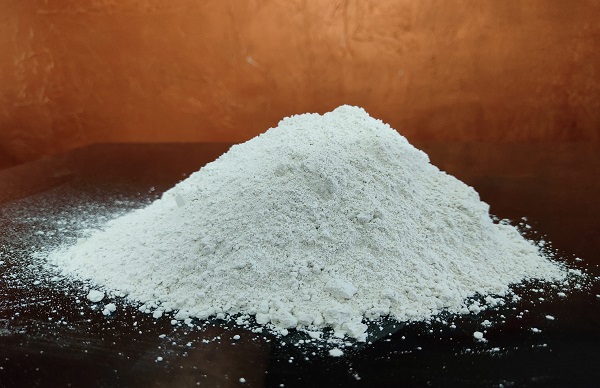


When it comes to working with industrial minerals, it's surprising how important it is to know exactly what you've got. Testing the purity of silica powder for instance, is not just another form of quality control, it's what separates good products from bad products that can ruin your entire production process. We at Sudarshan Group have observed that various manufacturing industries face the problem of poor-quality materials, which look good on paper but don’t work well in practical conditions. Thus, the importance of knowing the various purity testing methods has become a necessity in various industries, from glass manufacturing to construction.
Before we dive into the testing methods, let's discuss the importance of this to your bottom line. Pure silica powder guarantees performance. If the SiO2 levels are below specification, you will see problems in fast cloudiness in glass products, strength in concrete mixes, or inconsistent results in chemical processing.
Industries requiring high-grade silica include the ceramics, electronics, and coatings industries, where even the slightest impurity in the material can alter the behavior of the final product. In the electronics industry, impurities of iron oxide in the silica material, for example, cause undesirable coloration in the final product, which cannot be corrected in any way.
This is your go-to method for quick and precise composition analysis. The XRF machines will analyze the elemental composition of your silica powder based on the X-rays that are emitted from the powder. With this, you'll get precise readings of your SiO2 and impurities like aluminum, iron, or calcium in a matter of minutes.
Any quality supplier will use XRF as their primary method for testing and analyzing their product, and it's for a very good reason – it's non-destructive and gives you a complete picture of your product's composition. With the use of XRF machines, laboratories can now identify impurities as low as parts per million, and this is especially important if you're working with high-grade materials.
Wet chemical analysis is the more traditional method but is still valid. In this method, the samples are dissolved with acid and titration or gravimetric analysis is done to determine the silica present. Although it is slower than XRF, it is often the verification standard as it has been validated over the years.
Purity isn't just about chemical composition; particle size distribution affects how your silica powder performs too. Laser diffraction instruments measure particles from nanometers to millimeters, giving you data on consistency. As we discussed in our recent article about particle size consistency in silica powder, uniform distribution directly impacts workability and final product quality.
Purity level changes depending on what the application needs.Here are the purity levels used for various applications:When you're searching for quartz powder for glass manufacturing, what you really want is a purity level of at least 99.The mixture contains 5% SiO2, and the iron oxide content is below 0.03%.These purity levels are really strict because that's what's needed for making glass.For concrete and mortar, you want the SiO2 purity to be around 95-98%. The purity matters more than the particle size distribution in this case.Industrial Silica Standards apply differently depending on where you are. In India, the IS standards are used, while in other countries, the ASTM standards are the ones followed.
Lab testing can give you detailed results, but sometimes you just need answers quicker.Testing specific gravity with density bottles gives a quick idea of purity right there on-site.When the SiO2 content is higher, the specific gravity usually gets closer to 2.65.Looking at something closely with a magnifying glass can help spot clear contamination problems, but it’s never a replacement for doing the right chemical tests.
When you purchase silica powder, it is essential to ensure that you get test certificates along with the batch of material from the supplier. The certificates should include details of the test reports, which include the XRF test report, particle size distribution, moisture content, and impurity levels, if any.
Good manufacturers always maintain consistency in the materials they provide because they understand the process of production and the raw materials. This helps you avoid adjusting the formulations of the materials every time the supplier changes.
But it's not just the supplier's responsibility. As an astute manufacturer, it's also good practice for you to perform periodic verification tests on the raw materials, especially in cases where you are changing suppliers or increasing production volumes. A simple XRF spot check could save you from headaches down the production line.
Investing in the proper equipment for testing, or outsourcing it to an independent lab, will pay for itself in terms of waste, quality, and overall customer satisfaction.
Let's face it, purity standards are in place for a reason: they are there to protect your production process and, ultimately, the quality of your final product. Whether you are formulating specialty coatings or construction materials, knowing what's really in your silica powder ensures that your business runs smoothly and that your customers are satisfied.
+91-9983250000