
How Soda Ash Dense Is Actually Made
August 13, 2026
6 Common Uses of Sodium Silicate You Should Know
September 8, 2026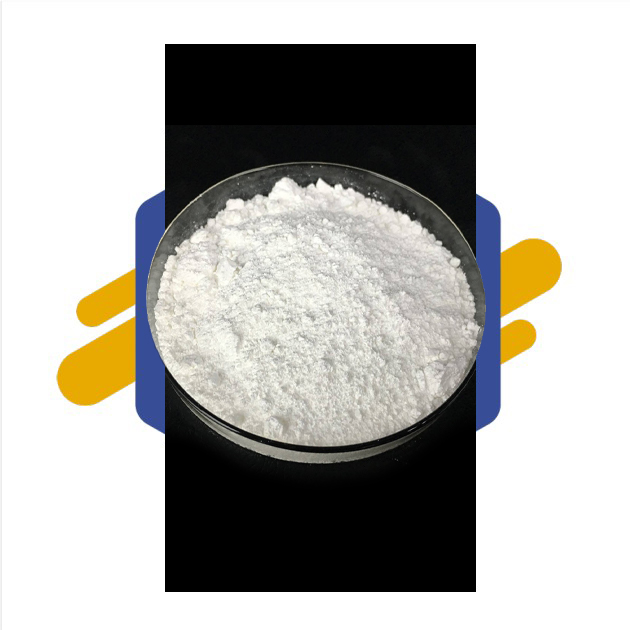
“Send me your best calcium carbonate.” This is a phrase we hear occasionally, usually from people who are not qualified chemists, purchasing managers, or plant supervisors, but who want to keep their production lines running. Fair enough. However, most producers realize at some point in the process that selecting calcium carbonate powder suppliers entails more than comparing price quotations. Purity, particle size, whiteness, moisture content – all of these affect how the powder behaves when it is being mixed in a paint, plastic or rubber compound. Choose the wrong grade, and you won’t know about it until later when you see cracks, the wrong color, or a compound that does not bind.
How Calcium Carbonate Powder Suppliers Differ in Grade and Purity
What many consumers do not realize upon first seeking out their supplier is that the same mineral will not necessarily be treated in the same manner by each supplier. For instance, ground calcium carbonate and precipitated calcium carbonate may come from material that is largely the same, yet will undergo widely varying processing. Some grades may not have undergone such rigorous milling that makes distinction in terms of whiteness irrelevant, but may instead have gone through the processing that allows for the production of the powder that will appear bright white in color. The important thing to note is that if a supplier cannot provide the content level of calcium carbonate in order to determine its whiteness, chances are that they are not conducting their testing properly.
Mesh Size and Whiteness Aren't Just Numbers on a Spec Sheet
Mesh size sounds boring until it isn't. A 200-mesh powder behaves nothing like a 400-mesh one once it's mixed into a plastic masterbatch or a rubber compound dispersion; changes in surface finish can shift viscosity enough that you're re-adjusting the whole formulation. Finer usually costs more, for what it's worth. Whiteness matters just as much wherever appearance counts. A batch with even a slight grey tint will throw off color matching no matter how careful you are with pigment dosing, and that's not something you want to discover after a production run has already shipped.
Common Questions to Ask Calcium Carbonate Powder Suppliers
Skip the small talk and ask the direct stuff. What's the CaCO3 purity, and how often is it actually tested every batch, or just the first one you ordered a year ago? What mesh sizes are genuinely in stock versus "available on request" (which sometimes means a three-week wait)? Is there a certificate of analysis with every dispatch? The better Calcium Carbonate Powder Suppliers answer these without flinching, usually with lab reports already on hand. If someone gets cagey or vague about testing data, take that as your answer.
Matching Grade to Application
Choosing the right grade is reliant on what is coming off the production line. For paint and coating producers, a high-whiteness powdered product that disperses easily without flattening out the underlying color is typically desired. Plastics processors may prioritize the distribution of particle size over any other factor, as it has a large impact on finished product toughness and sheen. The rubber compounders have a different set of concerns altogether; they care about the reinforcing properties and the interaction between the filler and the other ingredients being used. Construction material and PVC pipe makers typically have more flexibility when it comes to choosing a grade because their production processes can work with some rougher grades; however, these companies still have to be mindful of production consistency. A filler with fluctuating density will be able to distort the mix ratios over time without you realizing it until the results begin to deviate from the norm.
Why the Right Calcium Carbonate Powder Suppliers Save You Headaches Later
Switching suppliers mid-production is a pain, plain and simple. New paperwork, new testing, a formulation that might need re-tuning even if the spec sheet looks identical on paper. A supplier who stays consistent means your QC team stops flagging variance nobody can explain, and production planning stops being a guessing game. It's less about who quotes the lowest price and more about who actually understands your process well enough to steer you toward the right grade before you have to ask.
Why Manufacturers Work With Sudarshan Group
Sudarshan Group works directly with manufacturers across paints, plastics, rubber, and construction, supplying calcium carbonate powder that's tested and documented on every batch, not just the first one. We keep multiple mesh sizes and purity grades on hand, so switching applications doesn't mean switching vendors. Clients tend to stick around for a simple reason: what's written on the bag matches what shows up in their own lab tests, every time. No renegotiating quality after the fact, no surprises buried in a shipment.
Getting This Decision Right the First Time
Picking a calcium carbonate grade isn't something to hand off to guesswork or whichever sales rep called first. It comes down to knowing your process, asking for real test data instead of taking someone's word for it, and working with reliable calcium carbonate powder suppliers who treat consistency as the baseline, not a bonus. Whether you're formulating paint, compounding rubber, or filling plastic, the grade you choose now is going to show up in every batch that follows for better or worse.