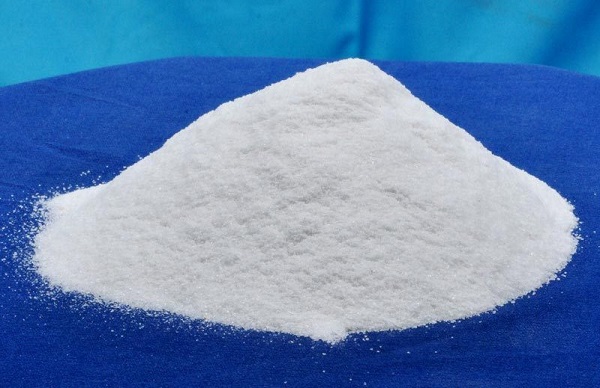
Dig up a chunk of quartz and it looks pretty clean. Look closer and it isn’t. There’s clay stuck in the cracks, rusty iron staining on the surface, sometimes a little mica hiding in there too. Glass makers, tile makers and paint formulators don’t want any of that, which is why quartz powder manufacturers spend so much effort on three jobs that sound dull: washing, grinding and sorting by size. A buyer will usually judge the finished powder on silica content, iron, moisture and particle size. Get one stage wrong and you’ll see it in at least one of those numbers.
How Quartz Powder Manufacturers Wash, Grind and Classify Quartz
The order barely changes from plant to plant. Crush it, wash it, dry it, grind it, sort it. What changes is how seriously each step gets treated, and that’s where you can tell good operations from average ones. Reliable output from quartz powder manufacturers comes down to discipline at every stage more than to any one fancy machine. Cut a corner early and it’ll catch up with you later, usually as a phone call about speckled tiles or a cloudy glass batch.
Washing is the step people underestimate
Washing is the first step because it is easier to remove the dirt while the quartz is in the lumps. The crushed product goes through scrubbing or attrition. In scrubbing, clay, other materials, and iron are removed from the grains using water and friction. Many factories add magnetic activities to get rid of magnetic materials. If the powder is meant for clear glass and silicone products, acid leaching is sometimes applied so that the iron level is very low. The next step is drying and rinsing to prevent clogging up the mill. What takes place in the first stages influences the quartz powder manufacturers greatly, as they cannot promise very high quality for the dirty batch.
Grinding methods used by quartz powder manufacturers for different fineness levels
The grinding process is the one that determines the size of the particle. The most widely used machines in this process are ball mills outfitted with lining made of silica or alumina. These mills are widely used because of their ability to minimize contamination with metal parts. For some specific mesh size ranges, mills that use vibration and pin mechanics are used, while jet mills are used for very fine micron-grade grinding. The operators make changes to speed, feed rate and the duration of each batch process as each of these parameters makes a slight difference in the resulting size distribution.
The lining is worth a mention. Drop cleaned quartz into a steel-lined mill and you’ve just put the iron back. In practice, the better quartz powder manufacturers match the mill to the end use, because ceramic powder and paint powder don’t need the same fineness.
Classification turns a mixed bag into grades
Grinding never gives you one neat size. You get a spread, and classification narrows it down. Air classifiers use airflow and spinning blades to send fine particles one way and coarse ones another. Vibrating screens take the larger mesh sizes, think 100, 200 or 325, and anything oversize goes back to the mill.
A tight range matters more than it sounds. It affects paint finish, ceramic shrinkage and how evenly glass melts. Buyers notice this when comparing quartz powder manufacturers on consistency instead of price. Most ask for a mesh or micron figure plus a certificate of analysis, and they’re right to.
Why choose Sudarshan Group among quartz powder manufacturers for bulk supply
Sudarshan Group runs washing, grinding and classification as one connected process, not three separate hand-offs. We match grades to what you actually make, whether that’s glass, ceramics, paint, rubber or foundry work. Batches are checked for silica, iron and particle size before they ship, and if you need a custom mesh or micron cut, it’s easier to sort that out before the first order than after. Bags and bulk bags are both available. Repeat orders are meant to match the last one, so your line doesn’t need retuning every time a truck shows up. When choosing between quartz powder manufacturers, it helps to ask for a sample and a test report first. We’re happy to send both.
What good quartz powder really comes down to
Honestly, it’s less mysterious than it sounds. Every stage passes its mistakes to the next one. Rush the washing and the mill drags impurities into the powder. Loosen the classification and two batches from the same plant behave differently on your line. Sudarshan Group keeps an eye on all of it, so what arrives is what you ordered. If you’d like to talk grades, samples or pricing, tell the team what you’re making and take it from there.